Seasonal Slot Designs and Their Ties to Cashback Eligibility Rules
Vera Becker · Aug 22, 2026
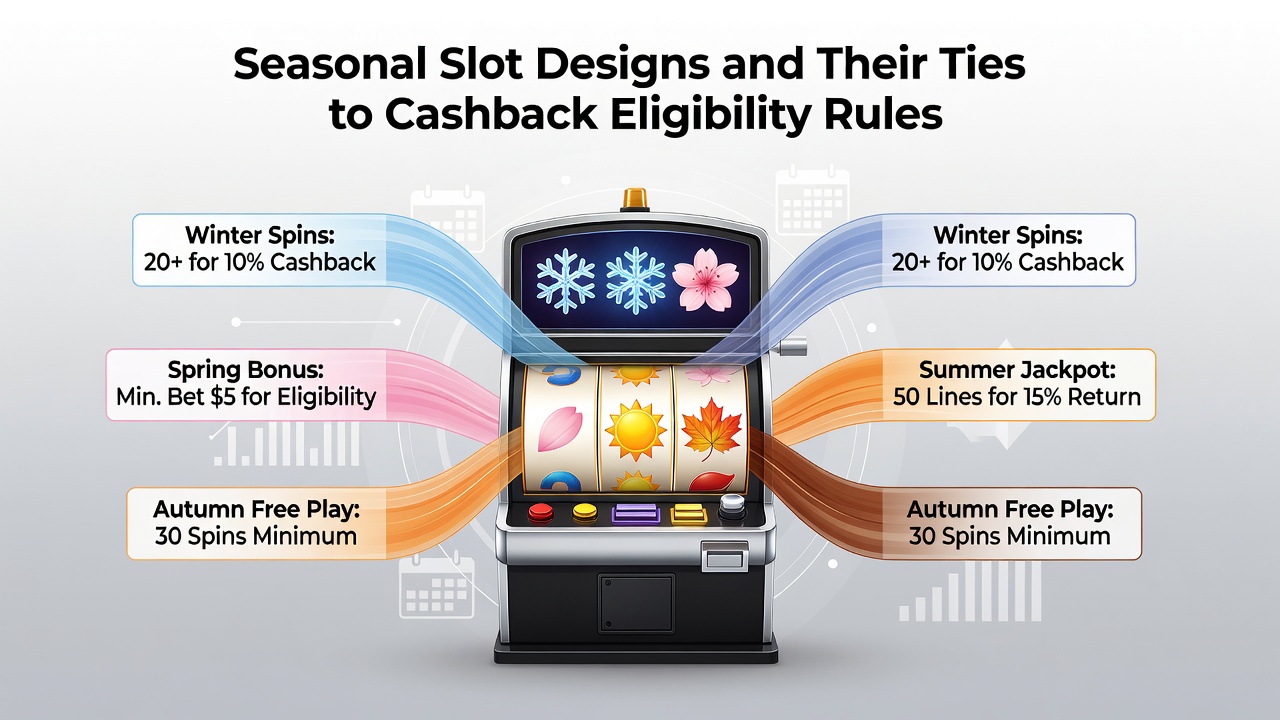
Seasonal Slot Designs and Their Ties to Cashback Eligibility Rules
Seasonal slot designs incorporate visual and mechanical elements tied to holidays or weather patterns, and these choices directly influence how cashback programs calculate eligible wagers across multiple jurisdictions. Operators adjust reel layouts, symbol sets, and bonus triggers to match events such as Halloween or summer festivals, while cashback rules often list game categories with varying contribution percentages toward loss rebates. Data from regulatory filings shows that themed mechanics can shift a title from full eligibility to partial or zero contribution depending on the season.
Core Mechanics of Seasonal Slot Themes
Developers embed time-limited graphics and soundtracks into base games, yet the underlying random number generators remain unchanged unless new volatility settings accompany the theme. Halloween releases frequently feature expanding wilds or multiplier ladders, whereas summer collections add free-spin rounds with beach motifs; each variation receives a separate game identifier in casino back-end systems. These identifiers feed directly into cashback tracking software, so a single provider might classify one seasonal version at 100 percent contribution and another at 50 percent based on internal risk assessments rather than player perception.
Cashback Eligibility Frameworks Across Regions
Regulatory bodies require operators to publish contribution tables that distinguish slot categories from table games and live dealer products. In Nevada, the Gaming Control Board mandates clear disclosure of which titles qualify for promotional rebates, and operators update those lists monthly to reflect new seasonal launches. Canadian provincial regulators apply similar requirements, with Ontario’s Alcohol and Gaming Commission requiring quarterly audits that verify whether holiday-themed releases meet the same loss-rebate formulas as standard titles. August 2026 saw several North American platforms revise their tables ahead of autumn campaigns, moving certain festive slots into lower contribution brackets after volatility reports indicated higher average bet sizes during those periods.
Interaction Between Theme Updates and Rebate Calculations
Because seasonal designs often carry higher marketing spend, operators sometimes attach wagering restrictions that reduce cashback accrual rates for those specific games. A player completing a deposit during a Halloween promotion might receive full cashback on standard video slots yet only 25 percent on the limited-time release, even though both games sit on the same software platform. Research from the International Gaming Institute at the University of Nevada indicates that such tiered structures appear more frequently when operators tie cashback to seasonal marketing budgets. The same study notes that European operators licensed by the Malta Gaming Authority follow comparable patterns, adjusting contribution percentages when new festive mechanics increase bonus frequency.
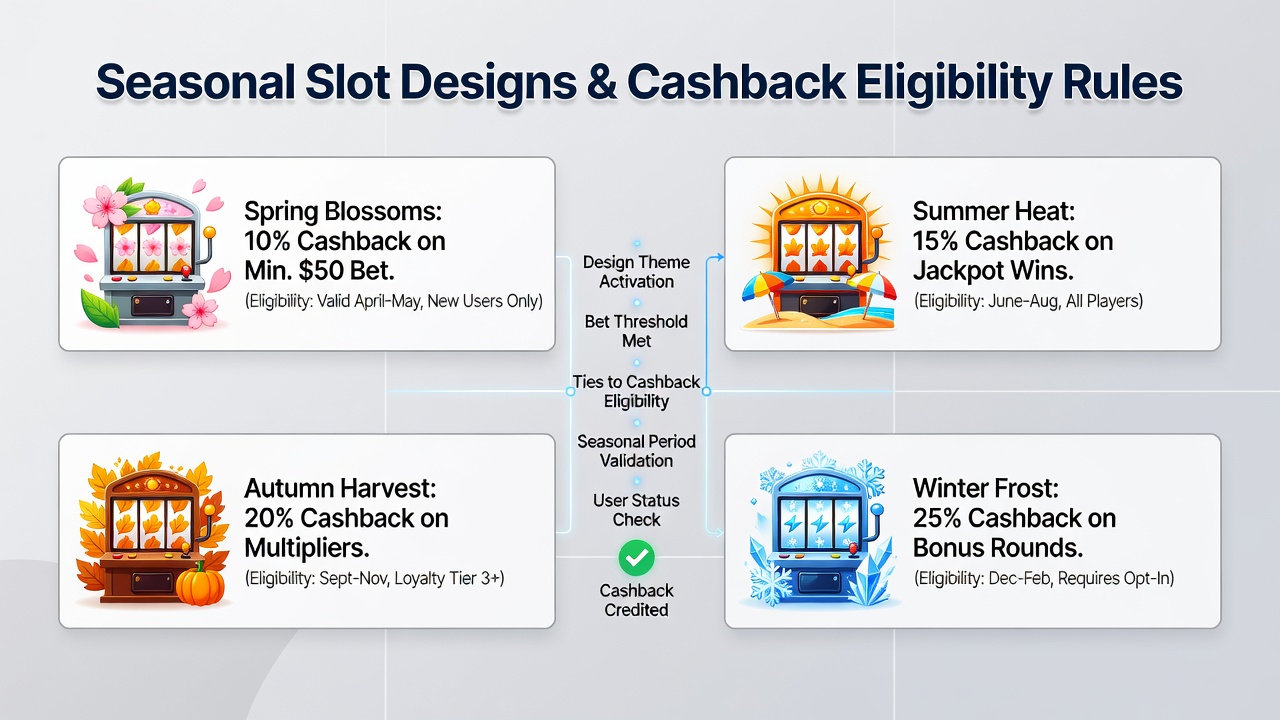
Tracking systems log each spin against the game identifier rather than the visual theme, so a player switching between two versions of the same base slot during different seasons can experience abrupt changes in rebate totals without noticing any difference in gameplay. Operators must maintain separate records for each identifier to satisfy audit requirements, and failure to do so has resulted in corrective orders from multiple regulators in recent years.
Player-Facing Documentation and Reporting Standards
Most platforms display cashback eligibility inside account dashboards, yet seasonal updates sometimes lag behind actual game additions. Players who review terms before October launches frequently discover that newly introduced Halloween titles carry reduced contribution rates compared with the previous year’s versions. Figures released by the New Jersey Division of Gaming Enforcement show that operators must submit revised contribution schedules at least 14 days before deploying seasonal content that affects promotional calculations. This lead time allows compliance teams to align marketing copy with the updated rebate formulas.
Conclusion
Seasonal slot designs therefore function as both creative assets and compliance variables that operators must map against cashback eligibility tables. Regulatory filings from Nevada, New Jersey, Ontario, and Malta demonstrate consistent patterns where themed releases receive distinct treatment in rebate programs. Players who examine contribution percentages before engaging with limited-time titles can align their activity with current rules rather than assumptions carried over from prior seasons. As platforms continue releasing new seasonal content each year, the connection between visual design choices and cashback formulas remains a documented operational requirement rather than a discretionary feature.